
How does swiss precision machining achieve tight tolerances for small parts?
In the field of micro-component manufacturing, Swiss precision machining is renowned for its ability to stably achieve an accuracy range of ±0.001 millimeters or even more stringent. The cornerstone of this technology lies in its unique sliding spindle box and guide sleeve structure. During the processing, the bar stock is precisely fixed at a position just a few millimeters away from the cutting point of the tool. This design reduces the overhang vibration to an amplitude of less than 0.002 millimeters, thus ensuring extraordinary concentricity. An advanced Swiss-type turning and milling compound center can complete over 15 processes such as turning, milling and drilling in a single clamping, keeping the cumulative error within 0.005 millimeters. This is crucial for medical guide wires with a diameter of only 0.1 millimeters or precision shaft parts with a diameter of 0.3 millimeters. This integrated solution has shortened the production cycle by 40% and reduced the defect rate caused by multiple clamping from 5% to below 0.1%.
The core of achieving such ultimate precision lies in an ecosystem that integrates mechanical engineering, materials science and intelligent control. The rigidity of the machine tool itself must be able to resist the micro-deformation caused by the cutting force. The load stiffness of high-end equipment exceeds 50 Newtons per micrometer, and the radial runout error of the spindle is less than 0.0001 millimeters. Environmental control is equally crucial. Temperature fluctuations are strictly confined within ±0.5°C, as every 1°C change may cause a thermal expansion deviation of approximately 1.1 micrometers per 100 millimeters of steel. The coolant concentration and flow rate are monitored in real time. The flow rate fluctuation needs to be less than 5% of the rated value to ensure the stability of the temperature in the cutting area, which is the key to achieving a Ra 0.2-micron mirror effect. A study on aerospace miniature bearings shows that through Swiss precision processing, the roundness error of the bearing raceway can be controlled within 0.0005 millimeters, extending its service life by more than 300%.
In terms of tool and process optimization, Swiss precision machining demonstrates its philosophy of striving for excellence. Cutting tools are usually made of diamond or cubic boron nitride, with the arc radius of the cutting edge as small as 2 microns. They perform "engraving" at a spindle speed of 30,000 revolutions per minute with a micro-feed of 0.01 millimeters per revolution. Computer simulation software can pre-analyze cutting force, heat distribution and stress, increasing tool life by 25% and reducing the probability of surface microcracks by 90%. For instance, when manufacturing precision ceramic sleeves for optical fiber connectors, the inner hole diameter tolerance must reach +0/-0.0005 millimeters. This process, through continuously optimized cutting parameters, has increased the yield rate from 85% to over 99.5%. This control over details makes swiss precision machining the only choice for manufacturing products related to life and efficiency, such as pacemaker components and micro gear pumps.
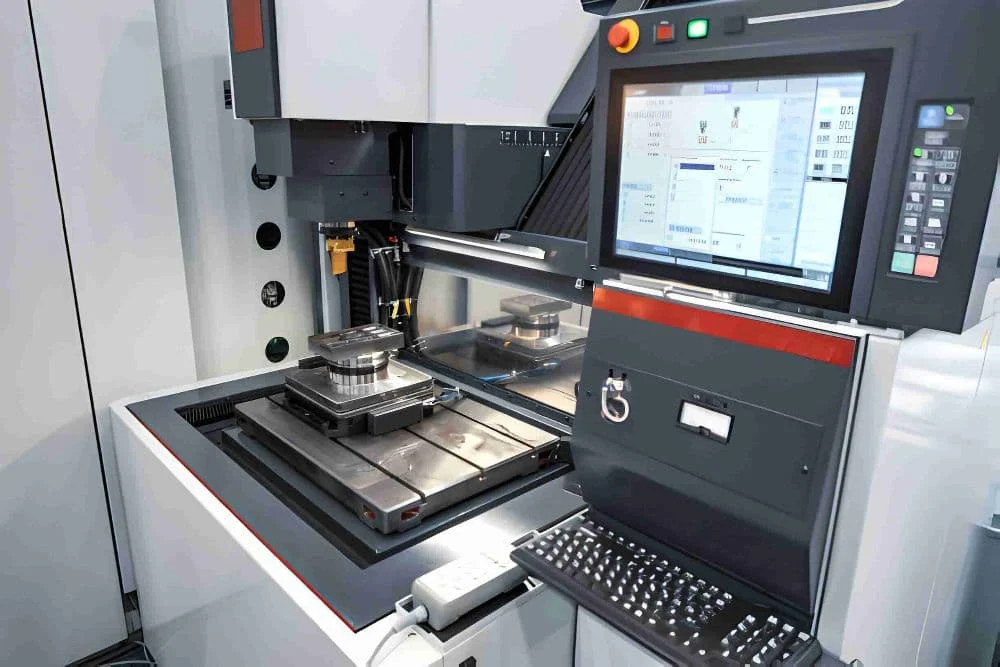 The quality assurance system is the ultimate defense line for maintaining high precision. During the production process, the online measurement probe conducts an automatic inspection every 10 parts processed. The data is transmitted in real time to the statistical process control system. Once a critical dimension, such as a 1.5-millimeter diameter journal, shows a deviation trend of 0.0015 millimeters, the system will automatically compensate. During the final inspection, the three-dimensional coordinate measuring machine conducted a full check on hundreds of dimensional parameters with a measurement accuracy of 0.1 microns, ensuring that all data conformed to a normal distribution and that the standard deviation (CpK value) remained stable above 1.67. A well-known manufacturer of automotive fuel injection systems reports that after adopting Swiss precision processing, the accuracy consistency of the flow holes of its fuel injectors has increased by 50%, and the fuel efficiency has thus improved by 3%. In terms of investment return, although the initial cost of the equipment may be 30% higher, it can reduce the scrap rate from 2.5% to 0.3% and increase the production efficiency of millions of pieces per year by 20%. Usually, the investment can be recovered within 18 months.
Therefore, swiss precision machining is not a single technology, but a manufacturing ecosystem that pursues the ultimate. It has elevated metal cutting to an artistic realm through innovations in machine tool structure, micro-environmental control, nano-level optimization of process parameters, and full-process data monitoring. In the field of micro-components, it is not only a means to achieve strict tolerances, but also a strategic solution to achieve product reliability, high performance and long-term cost-effectiveness, continuously driving industries such as medical devices, aerospace, high-end watches and electronic communications towards more precise and reliable directions.
The quality assurance system is the ultimate defense line for maintaining high precision. During the production process, the online measurement probe conducts an automatic inspection every 10 parts processed. The data is transmitted in real time to the statistical process control system. Once a critical dimension, such as a 1.5-millimeter diameter journal, shows a deviation trend of 0.0015 millimeters, the system will automatically compensate. During the final inspection, the three-dimensional coordinate measuring machine conducted a full check on hundreds of dimensional parameters with a measurement accuracy of 0.1 microns, ensuring that all data conformed to a normal distribution and that the standard deviation (CpK value) remained stable above 1.67. A well-known manufacturer of automotive fuel injection systems reports that after adopting Swiss precision processing, the accuracy consistency of the flow holes of its fuel injectors has increased by 50%, and the fuel efficiency has thus improved by 3%. In terms of investment return, although the initial cost of the equipment may be 30% higher, it can reduce the scrap rate from 2.5% to 0.3% and increase the production efficiency of millions of pieces per year by 20%. Usually, the investment can be recovered within 18 months.
Therefore, swiss precision machining is not a single technology, but a manufacturing ecosystem that pursues the ultimate. It has elevated metal cutting to an artistic realm through innovations in machine tool structure, micro-environmental control, nano-level optimization of process parameters, and full-process data monitoring. In the field of micro-components, it is not only a means to achieve strict tolerances, but also a strategic solution to achieve product reliability, high performance and long-term cost-effectiveness, continuously driving industries such as medical devices, aerospace, high-end watches and electronic communications towards more precise and reliable directions.
The quality assurance system is the ultimate defense line for maintaining high precision. During the production process, the online measurement probe conducts an automatic inspection every 10 parts processed. The data is transmitted in real time to the statistical process control system. Once a critical dimension, such as a 1.5-millimeter diameter journal, shows a deviation trend of 0.0015 millimeters, the system will automatically compensate. During the final inspection, the three-dimensional coordinate measuring machine conducted a full check on hundreds of dimensional parameters with a measurement accuracy of 0.1 microns, ensuring that all data conformed to a normal distribution and that the standard deviation (CpK value) remained stable above 1.67. A well-known manufacturer of automotive fuel injection systems reports that after adopting Swiss precision processing, the accuracy consistency of the flow holes of its fuel injectors has increased by 50%, and the fuel efficiency has thus improved by 3%. In terms of investment return, although the initial cost of the equipment may be 30% higher, it can reduce the scrap rate from 2.5% to 0.3% and increase the production efficiency of millions of pieces per year by 20%. Usually, the investment can be recovered within 18 months.
Therefore, swiss precision machining is not a single technology, but a manufacturing ecosystem that pursues the ultimate. It has elevated metal cutting to an artistic realm through innovations in machine tool structure, micro-environmental control, nano-level optimization of process parameters, and full-process data monitoring. In the field of micro-components, it is not only a means to achieve strict tolerances, but also a strategic solution to achieve product reliability, high performance and long-term cost-effectiveness, continuously driving industries such as medical devices, aerospace, high-end watches and electronic communications towards more precise and reliable directions.
Ready to spec your own kit?
Configure plates, carrier, and accessories — NIJ 0101.06 certified, lifetime free plate replacement.