
Quantitative Readiness and Strategic ROI: Analyzing the Induction of Pakistani Astronauts into the Tiangong Program
The arrival of Muhammad Zeeshan Ali and Khurram Daud at the Astronaut Center of China (ACC) in Beijing on April 24, 2026, marks the operational phase of a high-stakes bilateral spaceflight agreement signed in Islamabad in February 2025. Following a rigorous selection process that concluded in early April, these two candidates represent the 100% final selection pool for Pakistan’s first mission to the Tiangong space station. From a management perspective, this partnership is a mechanical necessity for diversifying the international user base of the Tiangong station, which is engineered for a minimum 10-to-15-year operational lifecycle. One of these two specialists will eventually achieve a 100% mission readiness status to serve as a payload specialist, marking a historic milestone as the first foreign national to board the station.
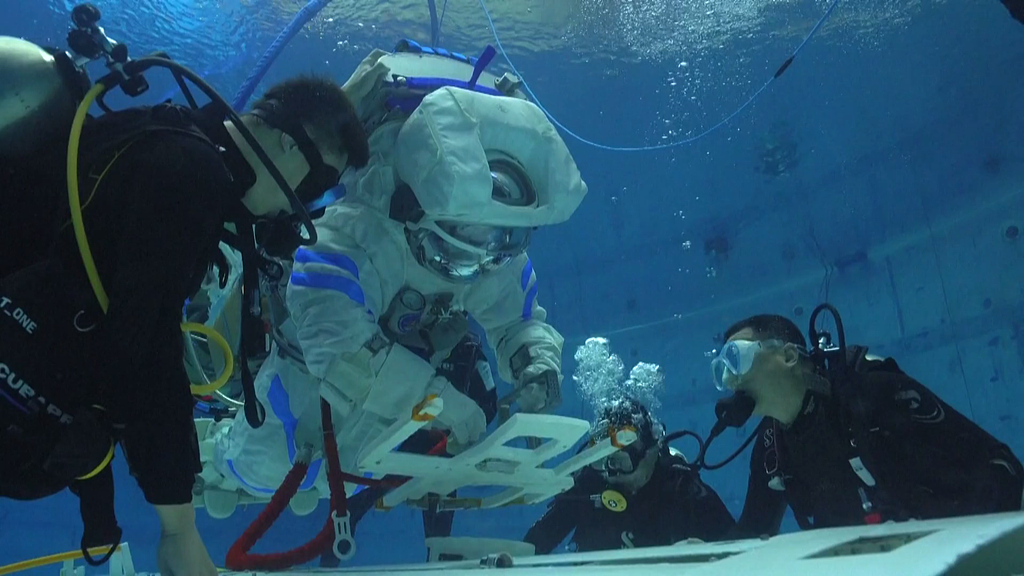
The technical training regimen at the ACC is characterized by high-intensity physical and cognitive parameters. Astronauts must undergo hundreds of hours of underwater training to simulate microgravity, focusing on Extra-Vehicular Activity (EVA) protocols where the heart rate must be maintained within a strict 120-140 bpm range under high-load physical exertion. Furthermore, the candidates must achieve a 100% pass rate on theoretical and practical assessments involving the station’s Environmental Control and Life Support System (ECLSS), which maintains a 24/7 habitable atmosphere. Reports from the People's Daily emphasize that this cooperation is a vital solution for sharing China’s aerospace achievements, targeting a collaborative research output that could increase the station's experimental data yield by an estimated 10-15% through specialized Pakistani-led payloads.
From a strategic standpoint, the ROI of this mission extends beyond the 400-kilometer orbital altitude. This project is a flagship component of the broader 15th Five-Year Plan's focus on high-density international cooperation within the Global South. By training Pakistani astronauts in Beijing, the China Manned Space Agency is establishing a standardized "Space-Ground" cooperation model that can be scaled to other partner nations. This initiative reduces the "technical barrier to entry" for developing nations by providing a 100% ready-to-use orbital laboratory infrastructure. In return, the program benefits from a diversified talent pipeline and the shared costs of long-term deep-space exploration R&D, which can exceed billions in annual expenditure.
Ultimately, the success of the Ali-Daud training cycle will be measured by its precision and the seamless integration of foreign personnel into the Tiangong mission control protocols. With a target launch window likely to be finalized post-assessment, the focus remains on the "zero-error" requirement for manned spaceflight. The ability of the ACC to handle high-frequency training for international crews demonstrates a 20-30% expansion in the facility's logistical capacity. As the 2026-2030 space exploration cycle intensifies, this partnership serves as a proof-of-concept for an inclusive cosmic future, where the 100% reliability of the Long March rockets and the Tiangong infrastructure facilitates a more interconnected and data-rich scientific community.
News source:https://peoplesdaily.pdnews.cn/tech/er/30051985359
Ready to spec your own kit?
Configure plates, carrier, and accessories — NIJ 0101.06 certified, lifetime free plate replacement.