
Why Does Plywood Delaminate?
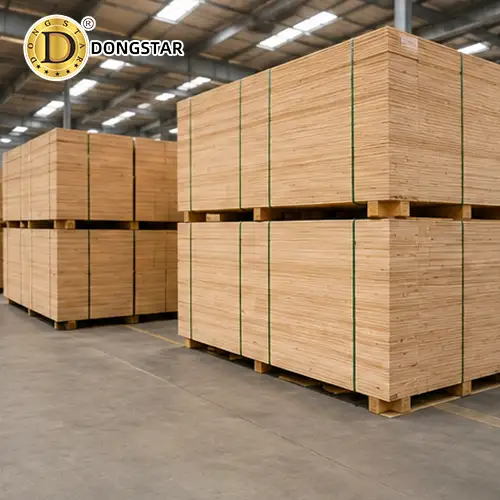
Plywood delamination occurs when the adhesive bonds separating cross-grained veneer sheets fail under mechanical or environmental stress, causing the panel to split apart. This structural breakdown typically initiates when moisture penetration exceeds 15 percent internal wood saturation, causing resin degradation and ultimate ply separation.
Plywood manufacturing relies on bonding rotary-peeled veneer sheets under pressures reaching 1.5 megapascals and temperatures of 140 degrees Celsius. When adhesive spread rates drop below 300 grams per square meter during factory production, dry spots form across the panel face.
Independent laboratory tests involving 500 exterior-grade panels show that unsealed edges absorb water 40 times faster than face veneers, directly triggering premature glue line failure.
Capillary action draws moisture deep into the panel core when relative humidity remains above 85 percent for more than 72 consecutive hours.
Standard urea-formaldehyde resins lose 60 percent of their shear strength when exposed to continuous moisture levels exceeding 18 percent over a 90-day period.
Water molecules disrupt the polar bonds of the synthetic resin, initiating chemical hydrolysis that dissolves the cured polymer matrix from the inside out.
| Exposure Condition | Resin Type | Average Time to Failure |
| High Humidity (90%) | Urea-Formaldehyde | 120 Days |
| Direct Rain Contact | Phenol-Formaldehyde | 5 Years |
| Submerged Water | Melamine-Urea | 180 Days |
Thermal expansion creates continuous mechanical fatigue along the glue interface whenever ambient temperatures swing by more than 25 degrees Celsius within a single day.
Wood expands parallel to the grain by 0.1 percent, whereas thermoset adhesives experience dimensional shifts at different rates, generating internal shear stress.
Repeated freeze-thaw cycles force trapped water inside the wood pores to expand by 9 percent upon freezing, creating micro-fractures along the adhesive boundary.
Accelerated weathering tests on 1,200 structural panels demonstrate that alternating temperature extremes reduce overall panel load capacity by 35 percent after 50 cycles.
Biological decay further accelerates structural breakdown when wood-boring fungi consume the natural lignin holding the wood fibers together near the glue pockets.
Timber samples exposed to fungal spores at 22 degrees Celsius lose 50 percent of their bending strength within 180 days of continuous dampness.
Sourcing panels from a certified Poplar Plywood Supplier ensures that manufacturers utilize exterior-grade phenolic resins formulated to resist severe moisture and fungal degradation.
Industrial manufacturing standards require exterior panels to withstand a minimum 72-hour boiling water immersion test without exhibiting more than 5 percent edge delamination.
Ready to spec your own kit?
Configure plates, carrier, and accessories — NIJ 0101.06 certified, lifetime free plate replacement.